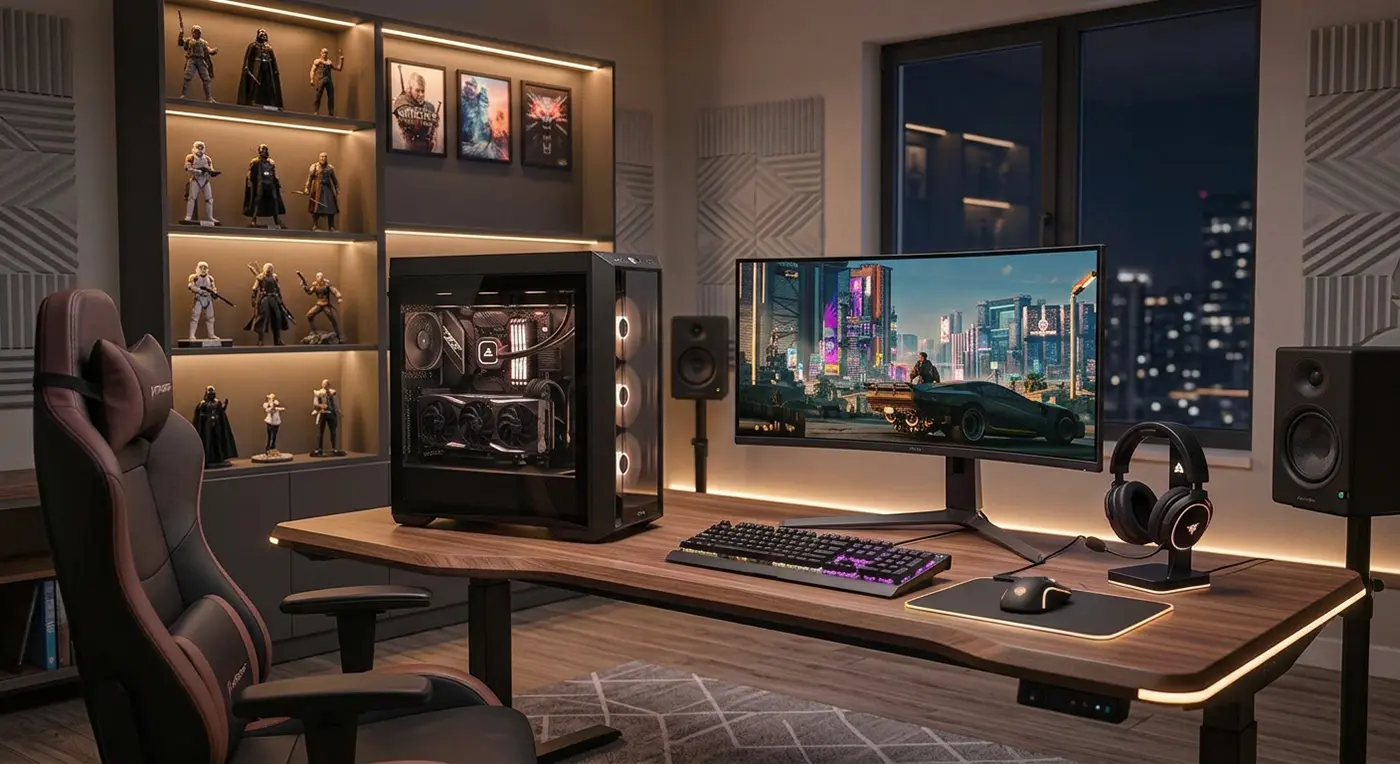
Early last year, a local gamer asked us to quote for an awesome custom gaming PC. In the end, he found a bargain on Amazon and went that route instead.
He thanked us for our advice, we thanked him for considering us, and that was that.
Until last week 🙁
He called because his computer wouldn’t power up. It had made some strange noises while he was backing up his files, and something clearly wasn’t right.
Once the machine was on our bench, things became horribly clear.
The trouble appeared to have started with a cheap memory stick. Its USB contacts were bent, causing a short circuit at the USB socket.
A short like this doesn’t necessarily spell disaster. In many cases, the power supply’s protection circuitry will kick in, and a reset may be all that’s needed to get things running again.
Unfortunately, this time, the power supply itself had suffered a catastrophic failure.
Its regulator had failed, allowing a destructive voltage to reach the motherboard. Components designed to run on just 12V or 5V don’t stand much chance against that kind of electrical fault.
The result?
Motherboard, CPU, RAM, SSD and a rather lovely graphics card. All toast.
A £2,500 gaming rig reduced to a very expensive repair job.
A properly designed, good-quality power supply has protection circuits intended to shut things down when a fault occurs, helping to prevent damage to the rest of the system. No power supply can guarantee protection against every possible failure, but the quality of this often-overlooked component really matters.
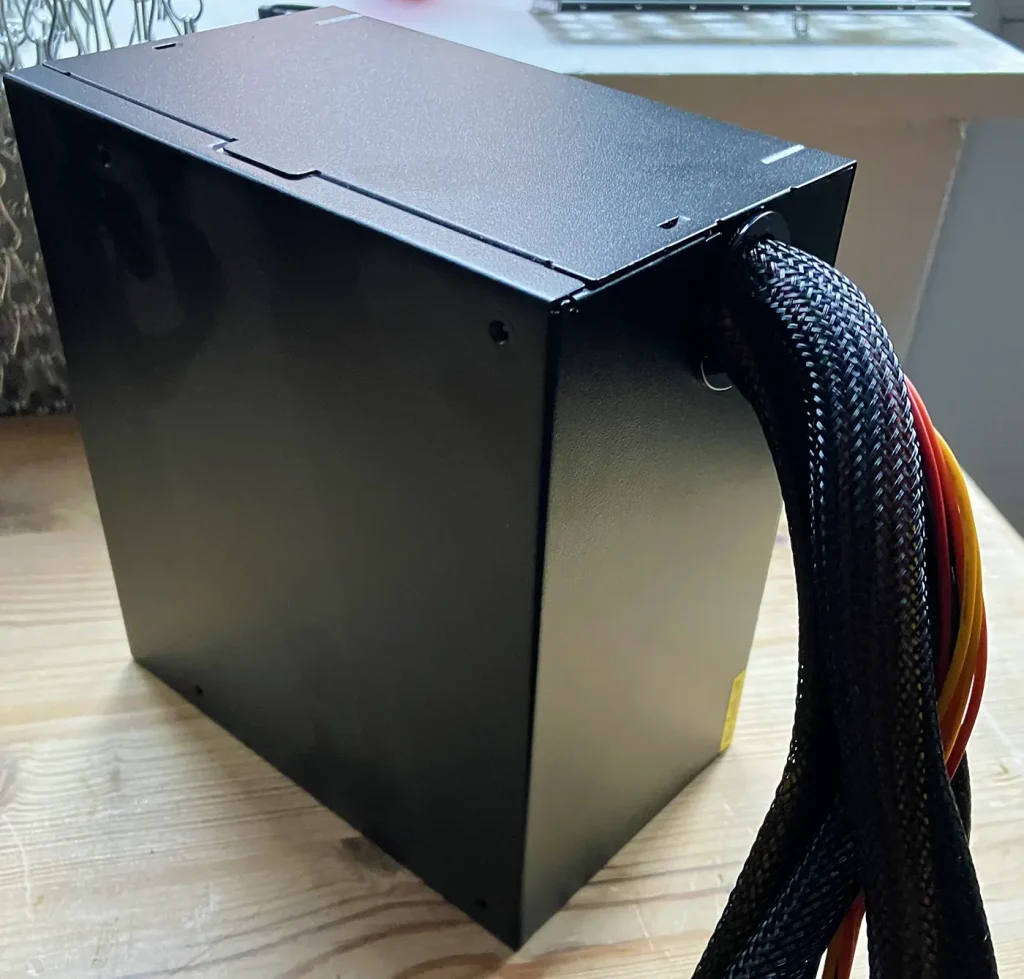

And here’s the lesson for anyone buying a high-end gaming PC, one that years of experience have reinforced.
If a company tells you all about the processor, memory and graphics card but doesn’t tell you exactly which power supply is inside, ask the question.
A quality PSU might add around £100 to a build costing £2,500. That’s a relatively small part of the overall budget, but it’s responsible for delivering clean, stable power to every component in the machine.
The graphics card might get the glory, but the power supply helps keep the whole show running.
When you’re investing in a dream gaming PC, it’s worth knowing what’s inside the box — not just the headline specifications.
Thinking of buying a new gaming PC? Give us a shout — we’re happy to offer a bit of advice before you buy.